Delivery Challan vs Invoice: Which to Raise First
Delivery challan vs invoice: for an agreed B2B sale, raise the invoice first. A challan goes first only when goods move before a final sale. Use our three questions and a one-minute check.
 Rahul Sharma
·
10 min read

For a regular B2B sale that is already agreed, delivery challan vs invoice is simple: raise the tax invoice first, make the E-Way Bill from it, then send the goods. A delivery challan goes first only when goods move without a final sale yet, such as job work, a branch or stock transfer, or goods sent on approval. For exact rules, check CGST Rule 55 and the official E-Way Bill portal.
Delivery challan vs invoice: the short answer
For a regular B2B sale that is already agreed, raise the tax invoice first, make the E-Way Bill from it, then send the goods. A delivery challan goes first only in the less common cases where goods move before the sale is final.
Most of our customers work this way. The sale is agreed, so they raise the invoice, generate the E-Way Bill from it, and dispatch. Dispatch first, invoice later is less common.
This delivery challan vs invoice guide gives you a short way to decide, a few real situations, and a check to run before the truck leaves. Each situation comes with a short example, so you can match it to your own dispatch and move on.
It is a practical guide, not legal advice. Rules get amended, and how they apply depends on your goods and your case. For exact rules, read the official text on the CBIC website, where Rule 55 is published, and check the E-Way Bill portal. Your accountant can confirm the details for your business.
Calm decisions at the desk are easier than fixes on the road. So the rest of this guide follows the order of a real dispatch: pick the document, make the E-Way Bill, check the details, and send the goods with papers that agree.
Three questions to pick your document

Three plain questions tell you which document to raise before the goods leave. Answer them in order and stop at the first one that applies.
- Is this a sale that is already agreed? If yes, raise the tax invoice.
- Is the price final, or only final once the buyer accepts? If it is only final once the buyer accepts, the goods are going on approval or sale-or-return. A delivery challan is the usual document.
- Are the goods going for job work, or to your own branch or another stock location? If yes, a delivery challan is the usual document.
If you answered yes to the first question and no to the other two, you are on the normal path: invoice first. If you answered yes to the second or third, you are on the challan-first path.
Not sure which answer fits? Ask the person who agreed the deal what was actually promised to the buyer. A firm order points to an invoice. An open offer points to a challan. Write the answer on the order sheet, so the person at the loading bay does not have to guess.
Job work and stock transfers have their own conditions, so check the official Rule 55 text if yours is one of them. If the order will go out in several lots, read the lots section below. That is a separate case and needs separate care.
Delivery challan vs invoice: when the invoice goes first
When the sale is agreed, the order is: invoice, then E-Way Bill from the invoice, then dispatch. This is the normal path for regular B2B sales, and it is the one Apni invoice’s E-Way Bill workflow is built around.
Here is how it looks on a normal day:
- You agree the order and price with the buyer.
- You raise the tax invoice with the buyer’s GSTIN, the goods, HSN codes and values.
- You generate the E-Way Bill from that saved invoice. At present, the official E-Way Bill portal is used to generate it.
- You fill the transport details, check them, and send the goods.
An E-Way Bill can be generated from an existing invoice. Details typed in by hand, or an invoice edited after the bill is made, are where mismatches begin. A wrong value, GSTIN, HSN code or pincode on the bill is a common cause of trouble.
The order also helps your team. The person at the desk finishes the paperwork, and the person at the loading bay only has to match the goods to the documents. Nobody has to chase a missing invoice after the truck has gone.
For the click-by-click steps, read our guide on how to generate an E-Way Bill from your invoice.
When the challan goes first, and what happens next
A delivery challan usually goes first when goods leave before the sale is final. The situations we see are job work, a branch or stock transfer, and goods sent on approval or sale-or-return.
These cases are less common than invoice-first sales. The challan records what was sent, to whom, and why.
Job work. You send goods to another unit to be worked on. These goods usually go out on a delivery challan.
Branch or stock transfer. You move stock from one location of your business to another. This usually goes on a challan too.
Goods on approval or sale-or-return. The price is only final once the buyer accepts the goods.
Example: five sofas on approval. A furniture maker sends five sofas to a dealer on approval, with a delivery challan and an E-Way Bill made from that challan. The dealer keeps three sofas. Only then does the maker raise the invoice, for those three.
Whether an E-Way Bill is required for a particular movement depends on the goods and the rules, so confirm that on the official portal. To see what a challan should contain, read our guide to the delivery challan format.
When the sale is final
In the sofa example, the dealer keeps three of the five, so the maker raises the invoice for those three. The challan shows what left your premises. The invoice shows what was sold.
A few habits help: match the invoice quantity to what the buyer kept, keep a note of goods that came back, and raise the invoice promptly once the buyer confirms. How exactly to refer to the challan on the final invoice is a question for your accountant, and for the official Rule 55 text.
If you need a refresher on the invoice itself, read how to create a GST invoice in simple steps.
Goods sent in several lots
When one order is delivered in several lots, do not assume you can invoice at the end. The source we checked says the full invoice is issued before the first lot goes, and later lots travel on delivery challans that refer to it.
This comes from Rule 55 of the CGST Rules. As summarised by GSTZen, the supplier issues the complete invoice before dispatch of the first consignment, and a delivery challan is issued for each later consignment, giving a reference to the invoice.
That is a secondary summary, not the law itself. The official text of the CGST Rules is published by CBIC at cbic-gst.gov.in. Please read Rule 55 there before you rely on this. Rules get amended, so your accountant should confirm how it applies to your case.
This is a different case from goods on approval. With approval, the final sale is not settled when the goods leave. With lots, the order is settled and only the delivery is split.
Before the first truck is loaded, decide who raises the invoice and who prepares each later challan. A short note on the order sheet is enough, and it keeps every lot travelling with the right paper.
Delivery challan vs invoice: mistakes we see
Most dispatch problems come from a document that does not match what is actually moving. These are the ones we see most often.
Choosing the wrong document or transaction type. A user picks “Tax Invoice” when the goods actually move on a delivery challan, or “Outward – Supply” for a job-work movement.
Editing the invoice after the E-Way Bill is made. A trader dispatches ₹1.2 lakh of goods. The invoice is later corrected to ₹1.25 lakh, but the E-Way Bill still shows ₹1.2 lakh and an old vehicle number. At a checkpoint, the officer finds both mismatches and detains the goods. If you must change the invoice, check the E-Way Bill again before the truck moves.
Making a duplicate instead of fixing the first bill. Some users create a second E-Way Bill for the same invoice. The better route is to cancel the wrong bill within 24 hours, or to update Part B if only the vehicle has changed.
Leaving transport details blank or wrong. A blank vehicle number means only Part A is filled. A vehicle number typed as “MH 12 AB 1234” with spaces may not be accepted where “MH12AB1234” is expected. If the truck changes mid-route, Part B needs updating.
Each of these is small at the desk and costly on the road, which is why the check below is worth a minute.
One-minute check before the truck leaves
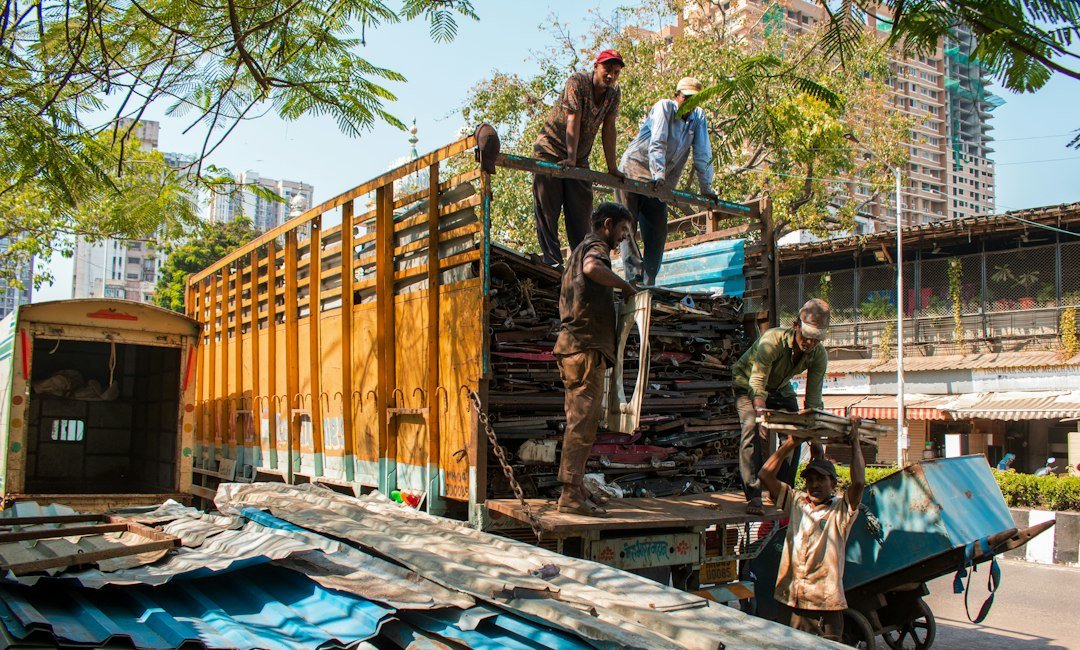
Before dispatch, check four things: the right document, matching values, filled transport details, and an E-Way Bill made before the goods move.
- Right document. Sale agreed means invoice. Approval, job work or transfer usually means challan.
- Values match. Value, GSTIN, HSN code and pincode are the same on the E-Way Bill as on the document.
- Transport details filled. Vehicle number in the right format, and Part B updated if the truck changes.
- Made before dispatch. Generate the bill before the truck leaves, not after. Check the distance too, because it decides how long the bill stays valid.
Put the invoice or challan and the E-Way Bill side by side and compare them line by line. Give one person the job, so the check is not skipped on a busy day. If anything looks off, fix it at the desk, not on the road.
How Apni invoice helps
Apni invoice combines GST invoicing, E-Way Bill and Delivery Challan in one workflow. An E-Way Bill can be generated from an existing invoice. It serves retail, wholesale, distributors, manufacturers and service businesses.
To be clear about one point: at present, the E-Way Bill is generated on the official website. When you create a delivery challan, you fill in details such as the transportation number and vehicle number.
Have a question about your billing or dispatch paperwork? You can reach us through the Apni invoice website.
Delivery challan vs invoice: FAQs
Can I dispatch goods before raising an invoice?
Yes, in specific cases such as job work, a branch or stock transfer, or goods sent on approval. These usually go out on a delivery challan. For a regular agreed B2B sale, raise the invoice first. Check CGST Rule 55 and the official E-Way Bill portal for exact rules.
Is an E-Way Bill needed when goods move on a delivery challan?
An E-Way Bill can be made from the challan. Whether one is required depends on the goods and the movement, so confirm it on the official E-Way Bill portal or with your accountant.
What do I do when the buyer keeps only some of the goods?
In our sofa example, five sofas went on approval and the dealer kept three, so the maker raised the invoice for those three. Check with your accountant how to apply this to your case.
What if I picked the wrong document on the E-Way Bill?
Cancel the wrong bill within 24 hours and generate a fresh one. If only the vehicle changed, update Part B instead. Do not create a second bill for the same invoice.
Do I raise the invoice at the end for orders delivered in several lots?
The source we checked says the full invoice is issued before the first lot, and later lots go on challans that refer to it. Read the official Rule 55 text and confirm with your accountant.

Join the conversation